
Rochester summers are short, so it’s worth having a yard you actually want to spend time in. A good outdoor living space doesn’t have to be big or expensive. It needs to fit how you use your yard, work with your property, and hold up to our winters. Here’s how to plan one.
Start with how you’ll use it
Before thinking about plants or furniture, make a list of what you want to do outside. Grilling and eating outdoors? A quiet place to sit in the morning? Room for the kids to play or the dog to run? A garden? Entertaining a crowd a few times a summer, or a table for four most nights? Your answers decide how much space you need, where it goes and what it’s made of.
Look at your yard first
- Sun and shade. Notice where the sun hits during the times you’d be outside. A west-facing patio can be very hot on summer evenings; a spot under mature trees may stay too damp for grass.
- Drainage. Watch where water goes after a heavy rain and during snowmelt. Many yards around Rochester have slow-draining clay, and a seating area built in a low spot will be soggy. Solve drainage problems before you build anything.
- Views and privacy. Note what you want to look at and what you’d rather screen out, like a neighbor’s windows or the street.
- Access. Spaces close to the kitchen door get used more. Plan paths so people don’t wear a track across the lawn.
- What’s underground. Call 811 (Dig Safely New York) a few working days before any digging project so utility lines get marked. It’s free.
Lay out the spaces
Think of the yard as a few simple areas connected by paths: a place to eat, a place to sit, open lawn, planting beds. Size each one for real furniture with room to walk around it. It’s easy to make a patio too small; a dining table and chairs need more space than people expect. Mark the outlines on the ground with a hose or spray paint and live with it for a few days before committing.
Use plants to shape the space
- Privacy: a mixed row of shrubs and small trees looks more natural than a single row of one kind, and doesn’t leave a gap if one plant dies. Deer are common in many Rochester suburbs, so check deer resistance; arborvitae in particular gets browsed hard in winter.
- Shade: a well-placed tree takes years to grow but gives the best shade. A pergola, umbrella or shade sail works in the meantime.
- Low care: choose tough perennials, grasses and shrubs rated for zone 5 or 6, mulch the beds, and group plants by their water needs.
- Four seasons: include evergreens, shrubs with berries or colorful bark, and grasses you leave standing, so the yard still looks good from the window in January.
Plan for our winters
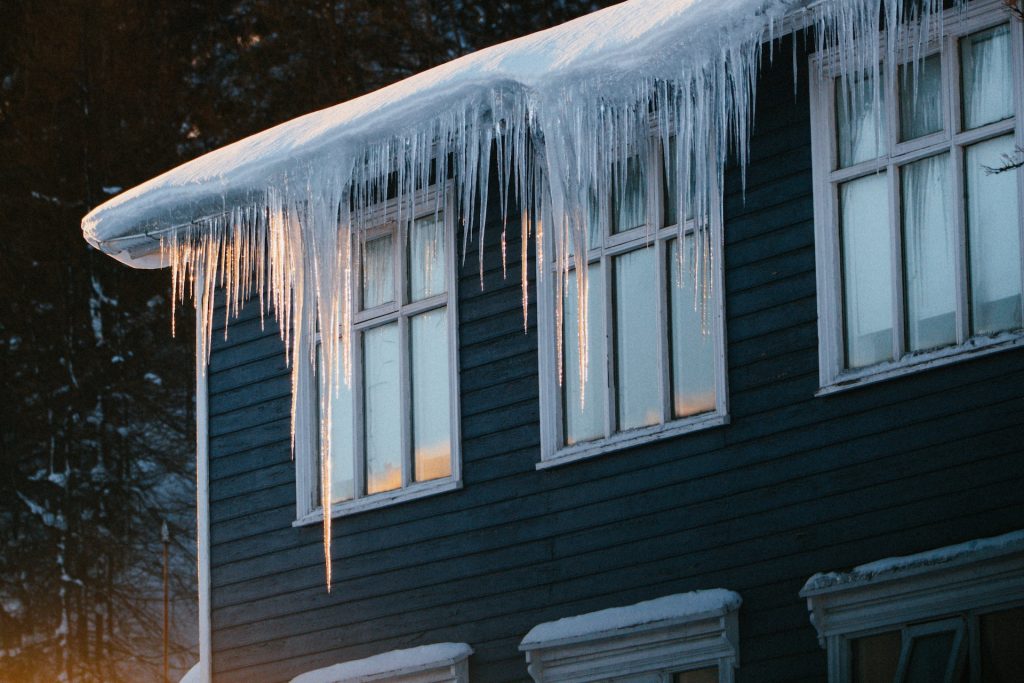
Anything you build here has to handle freeze-thaw cycles. Patios and walkways need a properly compacted base or they’ll heave and settle. Pick furniture you can store or cover, and plan where it goes in November. Keep beds and structures out of the path of the snowblower or plow, and don’t put delicate plants where snow gets piled off the driveway.
Stretch the season
- Lighting along paths and around the seating area makes the space usable after dark and safer to walk.
- A fire pit or outdoor heater adds weeks of use in spring and fall. Check your town’s rules on open fires before you build a fire pit.
- A covered area keeps you outside through summer showers.
- Screens or plant choices that cut down on standing water help with mosquitoes.
Keep it manageable
The best outdoor space is one you can keep up. Be realistic about how much time you’ll spend weeding, watering and mowing, and design to match. You don’t have to do everything at once, either; a plan lets you build it in stages over a few seasons.
Elite Property Care can help with the parts that make an outdoor space work: planting and garden beds, landscaping and lawn care, and irrigation and drainage. A free consultation is a good place to start.
Need a hand? Call 585.721.2471 or get a free quote.